Product Tailored Solutions
Tailored Supplier e-Tender Platform
icitech builds tailored supplier e-tender platforms for procurement teams in manufacturing, retail, energy, construction, hospitality, logistics, financial services, and holding-group structures. The platform is designed around your organisation's procurement policies, approval mechanisms, tender types, supplier structure, and ERP architecture — not the other way around. From purchase requisition through to contract, the entire process runs in a single digital workflow.

02 The problem
Built Around Your Procurement Model, Not a Standard Package
Manual email chains and spreadsheet-based tendering create control gaps and competitive disadvantage as procurement volumes grow. icitech's supplier e-tender solution addresses this without requiring your organisation to reshape its own working practices. Tender types, evaluation criteria, approval matrices, and the supplier experience are all configured to match your procurement management model. The result is a transparent, traceable, and auditable digital procurement process.
03 Capabilities
Tender Creation and Category-Based Process Management
When the procurement team opens a new tender, they define the product or service category, technical specification, delivery conditions, payment terms, bid deadlines, and the suppliers to be invited. Separate tender templates and evaluation criteria can be created for different categories — services procurement, raw materials purchasing, or capital equipment investment, for example. Each tender opens with the data fields that category requires and progresses within a consistent structure throughout.
Supplier Invitation, Pre-Qualification, and Bid Management
Before suppliers are invited to tender, financial, legal, technical, and quality pre-qualification criteria can be verified through the platform. Certificates, references, and mandatory documents are collected digitally, and documents approaching expiry are flagged automatically. Only suppliers who meet the defined pre-qualification level are admitted to the tender process. Invited suppliers upload their bids, price schedules, and technical documents through the portal; all submissions remain sealed until the deadline and are opened according to the rules your organisation sets.
Electronic Reverse Auction and Dynamic Bidding
A dynamic reverse-auction module can be activated where the requirement calls for it. Suppliers may revise their bids within a defined period and can view ranking or price-gap information within the visibility rules you set. Time extensions, minimum bid increments, ceiling and floor values, and automatic closure rules are all configured specifically within the project scope.
Technical and Commercial Evaluation
Tenders do not have to be evaluated on price alone. Weighting can be applied to technical compliance, quality, lead time, warranty terms, payment conditions, and supplier performance. Different teams complete their own evaluation areas independently; the system consolidates the results according to the agreed scoring model and presents a comparative view to support the award decision.
AI-Assisted Bid Analysis
AI and LLM capabilities can be integrated into the tender process where required. The system can summarise lengthy bid documents, compare equivalent line items, and surface critical differences between suppliers. Questions such as "Which supplier offered the most favourable delivery terms?" or "Which bids diverge on the critical clauses of the technical specification?" can be asked in natural language. AI outputs provide analytical support to the procurement team; the final decision always rests with them.
Document, Specification, and Q&A Management
Technical specifications, draft contracts, drawings, and tender documents are published through the portal. Version control records which document version each supplier has seen. The Q&A process is managed centrally; questions of general relevance submitted by one supplier can be shared with all participants at your organisation's discretion.
Multi-Tier Approval and Role-Based Authorisation
Tender opening, supplier shortlisting, award approval, and contract decisions can each be linked to different management levels. Multi-tier approval workflows are configured by value threshold or category. Role-based authorisation, bid confidentiality, and a full transaction log form the core security layer of the platform.
Integration with ERP and Procurement Systems
The solution can be integrated with SAP, Microsoft Dynamics 365, Oracle, and your organisation's existing procurement systems. Supplier, materials, category, and purchase requisition data is drawn from your ERP. Once a tender is concluded, the awarded supplier and agreed pricing are written back to the ERP and the purchase order process can be initiated automatically.
04 How it works
BI and Savings Analytics
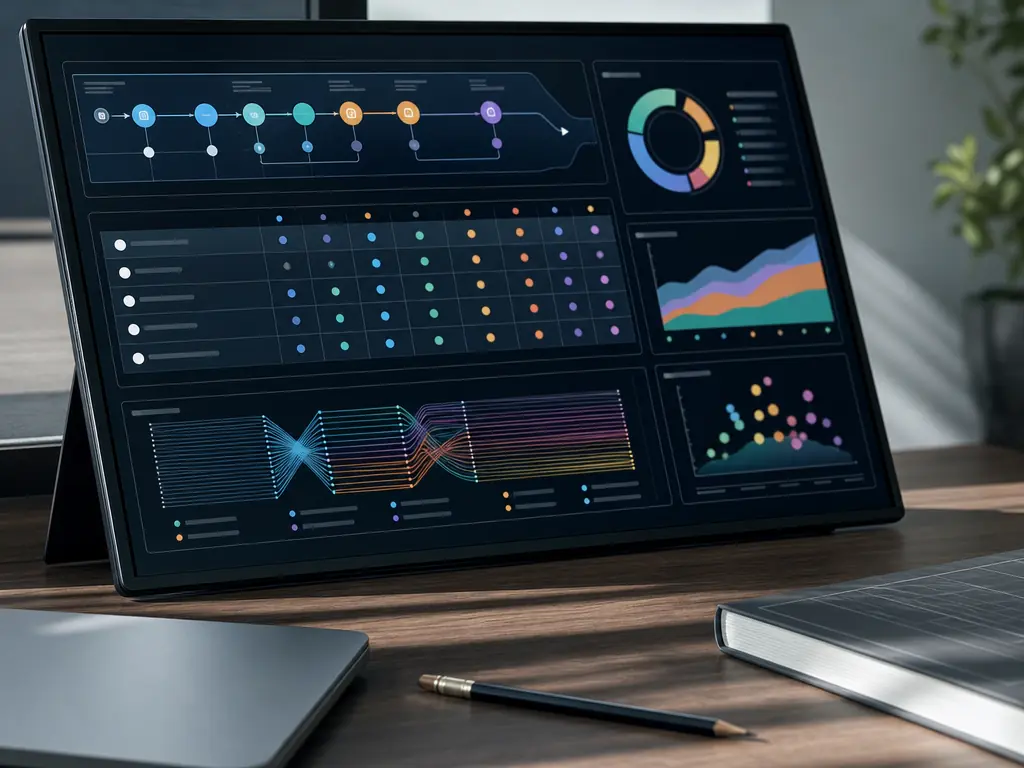
Management dashboards display total tender volume, number of bids received, price variances, category-level savings, supplier participation rates, and process cycle times. Through BI integration, e-tender data can be combined with your organisation's wider procurement analytics and surfaced in management reporting.

Flexible Architecture for Multi-Entity and Group Structures
In holding-group structures, individual companies can share the same platform while managing their own procurement policies, approval matrices, and supplier pools independently. Group procurement teams can run consolidated tenders across shared categories. This architecture strengthens procurement standardisation across the group while preserving the flexibility each operating entity needs.
Transparency and Audit Trail
Bid revisions, document uploads, Q&A records, approvals, and award decisions are stored with timestamps. A full audit trail records which user took which action and when. The process can therefore be reconstructed in its entirety at any point, meeting the requirements of internal audit and corporate governance.
05 Same group
Other products
- Tailored SolutionsTailored Mobile Payment, Collections, and POS Solutions
- Tailored SolutionsTailored Mobile Field Team Management Solutions
- Tailored SolutionsA Mobile Order and Dealer Management Platform Built Around Your Distribution Network
- Tailored SolutionsTailored Mobile Field Sales and Order Management for Your Sales Organisation
- Tailored SolutionsAI-Powered Mobile Loyalty Programmes Tailored to Your Organisation
- Tailored SolutionsTailored Supplier Communication Portal
06 FAQ
Frequently Asked Questions
01Which sectors is this platform suited to?
The platform serves organisations in manufacturing, energy, construction, logistics, retail, hospitality, financial services, and holding-group structures, among others. The system is configured from the outset to reflect the tender and supplier requirements specific to your sector.
02Can it integrate with our existing ERP?
Yes — the platform can be integrated with SAP, Oracle, Microsoft Dynamics 365, and comparable ERP environments to enable consistent data exchange. Procurement data does not need to be maintained separately in two systems.
03How does supplier pre-qualification work?
Suppliers are assessed against the criteria your organisation defines at the point of registration and are screened before being invited to tender. This saves time for your team and prevents unqualified bids from entering the process.
04What is the purpose of the electronic reverse-auction module?
It creates a structured, transparent negotiation environment in which suppliers submit competitive bids — either without visibility of one another's prices or within defined rules — driving best value in an auditable way.
05What does AI-assisted bid analysis offer in practice?
Submitted bids are compared automatically, with anomalies and cost variances highlighted for the evaluation team. Decision-makers can focus on the critical points rather than reviewing every document in full.
06How are multi-tier approval workflows configured?
Different approval levels and authorised individuals are defined by parameters such as procurement value, category, or business unit. Every step is recorded in the system, making it straightforward to identify the source of any approval delay.
07Can multiple entities within a group be managed on the same platform?
Yes — through its flexible architecture, each entity operates independently with its own policies and user permissions, while consolidated group-level reporting remains available. The structure combines central oversight with distributed operations.
08How is the supplier Q&A process handled?
Questions raised by suppliers during the tender period, and the responses to them, are managed through a central area and can be shared simultaneously with all invited parties. This removes information asymmetry and supports equal competition.
09What assurances are provided for audit and transparency purposes?
Every action in the system generates an immutable audit trail recording who did what and when. These records can be reported directly in internal audit or external compliance processes.
10How long does onboarding take, and is training required?
Timelines vary with your existing infrastructure and the scope of configuration, though a phased go-live approach is used to maintain uninterrupted operations. Role-specific training and on-site support are provided for procurement teams.
07 Contact