Sector Food Production
Food Safety, Traceability, and Digital Operations Management for Food Producers
icitech supports food producers in managing the full journey from raw-material intake to despatch — covering HACCP records, hygiene verification, equipment maintenance, and lot traceability — within a single digital operations framework. To replace paper-based control records, fragmented corrective-action workflows, and quality data held in isolation from maintenance history, icitech brings together Ready App, Hygiene Mobile Solution, and Task360 with tailored software development and API integration capability.
02 Context
Where Digitalisation Meets the Operational Reality of Food Production
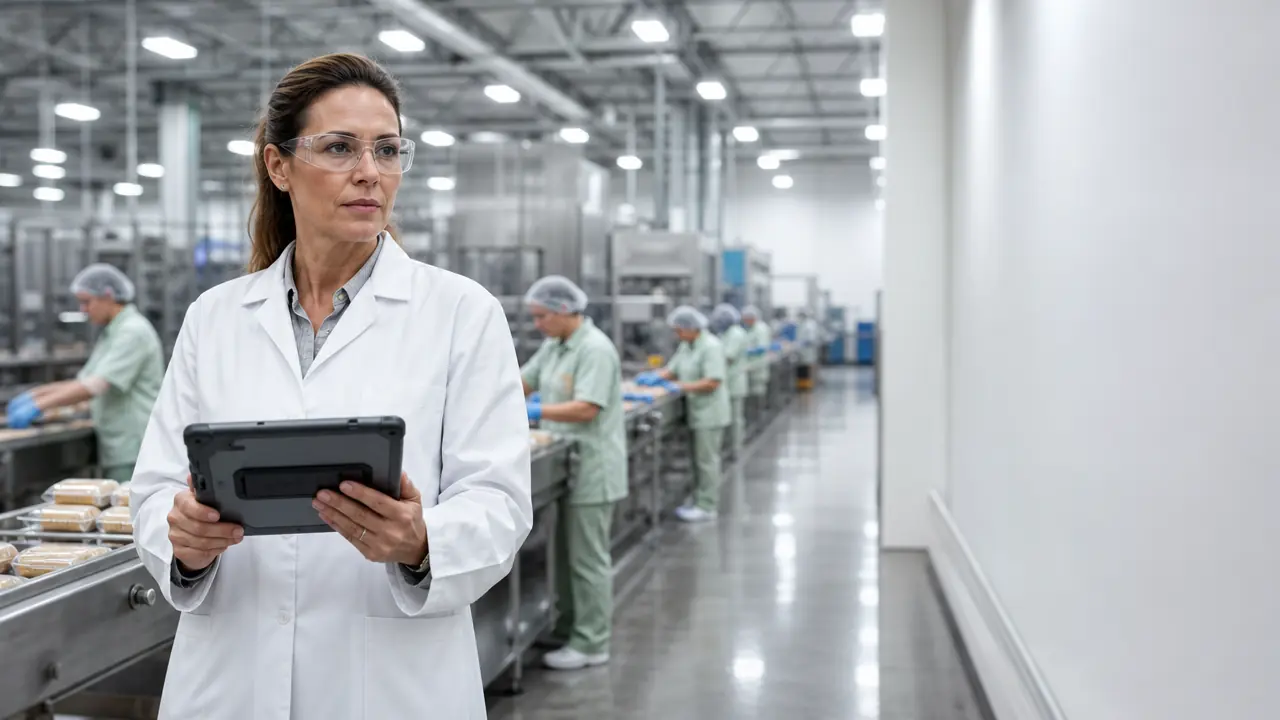
Food safety management requires biological, chemical, and physical hazards to be kept under control at every stage of the production process. That means more than collecting more data; it means being able to answer immediately which product, in which lot, on which line, in which shift, and after which control point requires action. When control records are entered at the end of a shift, a gap opens between the live operation and the written record — deviations become retrospective reports rather than real-time interventions. When a non-conformance sits in one folder, the corrective action in an email, and the closure evidence in another system, traceability is rendered ineffective in practice. When lot and supplier data live in the ERP, audit forms in a separate application, and maintenance records in yet another system, every step of root-cause analysis demands additional manual effort. icitech addresses this connectivity problem by designing food production's shop-floor reality, hygiene procedures, equipment maintenance, and quality management as a shared data chain.

03 Context
AI-Assisted Mobile Audit
Ready App brings food hygiene, food defence, production quality, and operational safety audits together in a single mobile platform — covering planning, on-site execution, and reporting. The application supports offline working; a loss of connectivity does not interrupt on-site recording. AI-assisted analysis functions as a decision-support layer that helps quality teams identify critical risks earlier; food safety decisions remain under authorised human control at all times. Removing the paper dependency from audits and generating structured records ready for centralised analysis significantly reduces the time quality teams spend on audit preparation.
04 Solution areas
Hygiene and Sanitation Management
Hygiene Mobile Solution goes beyond marking a cleaning task as complete: it provides a verification layer that evidences the task was carried out at the correct location and time. Mobile task management, geo-fencing, before-and-after photographic records, and AI visual analysis make each sanitation step traceable by time, location, and visual evidence. Night-shift cleaning routes and sanitation steps during production-line changeovers become visible on the management dashboard as individually recorded and verified tasks.

05 Context
Equipment Maintenance and Its Connection to Quality
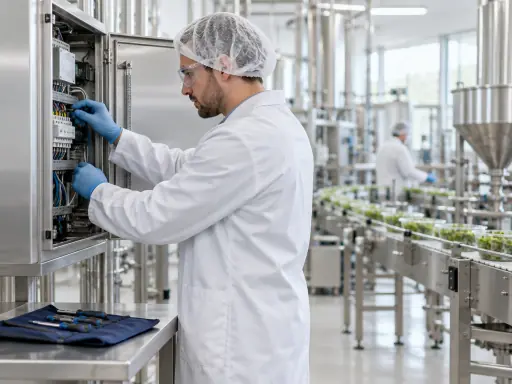
Task360 brings together work orders, asset management, maintenance history, audit checklists, and spare-parts inventory in a mobile environment. In food production, an equipment failure can trigger a quality deviation; but if maintenance history is not connected to quality records, recurring problems are identified late. Bringing Task360's asset and maintenance history model into the same analytical context as quality data makes root-cause analysis faster and more reliable. Preventive maintenance workflows for critical line equipment, cold stores, and HVAC systems can be built on this infrastructure.
06 Context
Traceability and Integration Architecture
Rapid access to lot, supplier, raw-material, production-line, and despatch data is the foundation for identifying the scope of an affected batch during a non-conformance and initiating the appropriate response. icitech uses its API and tailored software development capability to design a traceability layer between ERP, production, quality, and warehouse systems that fits the organisation's own processes. HACCP monitoring records, corrective-action workflows triggered by critical limit breaches, and audit trail requirements are all shaped within this architecture according to the organisation's existing methodology. Offline data synchronisation, user permission modelling, and record integrity are treated as integral parts of the project's security design. Where data governance obligations such as UK GDPR apply, those requirements inform the access control and retention design from the outset — though the organisation remains responsible for its own compliance position.
07 Solution areas
Capability Areas
icitech's food production scope covers four core areas: AI-assisted mobile audit (Ready App); digital hygiene and sanitation verification (Hygiene Mobile Solution); equipment maintenance and asset management (Task360); and bespoke integration with ERP, quality, and production systems. These components can be deployed independently or connected and extended progressively through a phased digital transformation roadmap. A pilot scope typically begins with the process carrying the highest record burden — audit, sanitation, or critical equipment maintenance — with ERP lot data and management reporting integrated in a subsequent phase.
08 Context
How Outcomes Are Measured
The indicators worth tracking in food production projects include audit completion rate, corrective-action closure time, frequency of recurring non-conformances, rate of missing control records, sanitation task completion percentage, and planned maintenance compliance rate. A measurable operational gain is also the reduction in time required to access lot and maintenance records during a non-conformance or root-cause investigation. Establishing a baseline for current process duration and error rates at the start of the project is what makes these indicators meaningful to track over time.
09 Solutions
Related solutions
- Data and Artificial Intelligence
icitech supports enterprise organisations in taking AI and data initiatives from use-case prioritisation through to production deployment.
- Software and Integration
icitech supports organisations that have reached the limits of their software architecture in terms of scale, integration, and long-term sustainability.
- Kalite ve Denetim
10 Case studies
Stories from this sector
11 FAQ
Frequently Asked Questions
01Can icitech's solutions integrate with our existing ERP platform?
Yes — API integration capability allows connections to SAP, Oracle, and other widely used ERP platforms, avoiding data duplication and keeping operational processes within a single flow. The integration design is shaped to fit the organisation's own data model and processes.
02How long does the transition from paper-based HACCP records to a digital system typically take?
The timeline depends on the complexity of your existing form structures and the scale of the operation, but the transition is generally completed within a few weeks. Field-team training and a pilot phase are included within that programme.
03Does the mobile audit application work without an internet connection — for example, in cold stores or areas with poor signal?
Ready App supports offline data capture; records are synchronised automatically once connectivity is restored. This is particularly relevant for cold stores and production areas where network coverage is unreliable.
04How is hygiene verification data linked to quality records for a given production run?
Sanitation data collected through Hygiene Mobile Solution is automatically associated with the quality record of the relevant production batch. This means that during an audit, any hygiene non-conformance can be traced to the affected lot in real time.
05Can corrective-action workflows be configured to reflect our internal approval procedures?
Yes — escalation rules and approval steps can be defined to match each organisation's internal procedures. Responsibility assignment, deadline tracking, and evidence upload are all functions that can be incorporated into those workflows.
06Why should equipment maintenance history and quality data be held in the same system?
A failure or maintenance delay on a piece of equipment can directly affect the safety of product processed on that equipment. Holding both data sets in one platform accelerates root-cause analysis in any potential recall or withdrawal scenario.
07Does lot traceability cover raw materials and intermediates, or only finished goods?
Lot linkage is established at every stage — from raw-material intake through intermediate processing steps to despatch. This structure allows the scope of an affected batch to be identified and contained quickly in any recall situation.
08How does Task360 manage the day-to-day workload of field teams?
Tasks are planned by shift, equipment, or location and assigned to the responsible operative via mobile notification. Completion status is monitored in real time, giving managers the visibility to intervene proactively if a task is delayed.
09What does the system's contribution to a food safety audit look like in practice?
All control records are stored digitally with timestamps and user attribution, so documents requested by an auditor can be produced within minutes. This materially reduces the time spent on audit preparation and the risk of findings arising from missing records.
10Is this approach viable for small and mid-sized food producers, or is it designed primarily for large sites?
The modular structure means organisations can start with the components they need most and expand the system as their operation grows. This avoids the high upfront licence cost of monolithic software and supports a phased investment model.
12 Contact